Tax law
Tax Lawyer in Geneva
COTAX is a firm of tax lawyers in Geneva. Tax advisory and litigation for companies, executives and families with international wealth. We act before the Geneva cantonal tax administration (AFC), the Federal Tax Administration and the appeal courts, in Switzerland and in France.
Our two lawyers are members of the bar and devote their entire practice to Geneva, Swiss and Franco-Swiss tax law: tax returns, assessments and discretionary assessments, objections and appeals, tax at source, lump-sum taxation, tax and estate planning, tax audits, supplementary tax and voluntary disclosure. Every engagement starts with a confidential appointment, at our Geneva office or by videoconference.
Why a tax lawyer
Why consult a tax lawyer in Geneva
Choosing a tax lawyer in Geneva rather than a generalist adviser comes down to one simple reason: Geneva taxation combines three levels of tax, federal, cantonal and communal, an administrative practice specific to the AFC, and short procedural deadlines. A poorly drafted or late objection permanently closes a legal remedy. Our work is to secure upstream what can be secured, and to defend downstream what must be defended.
We cover the full tax cycle: review of the situation, structuring, reporting obligations and, where necessary, audits and litigation before the Geneva and federal courts. Every case is read simultaneously under Swiss and French law, from our two offices in Annecy and Geneva.
There is also a dimension few advisers offer: the lawyer's professional secrecy. Your exchanges with your tax lawyer are protected, including when they concern an unregularised situation. This protection is decisive before a voluntary disclosure or when facing a request for information from the tax administration, the moment when a single document handed over without prior analysis can shape the whole case.

Tax lawyer, fiduciary or certified tax expert: what is the difference in Geneva?
The question comes up in almost every first meeting. A fiduciary keeps the books and prepares the tax return; it is production work, indispensable and often well done. A certified tax expert brings recognised technical competence in taxation, generally in an advisory or audit setting. The tax lawyer adds two things the others do not have: the monopoly of representation in court, hence the ability to take a dispute up to the Federal Supreme Court, and professional secrecy enforceable against the administration.
In practice, the division is simple. As long as the situation is routine, a fiduciary is enough. As soon as a legal issue appears, a contested assessment, a tax audit, a requalification, a question of tax domicile, supplementary tax or evasion, the involvement of a Geneva tax lawyer changes the nature of the case. We regularly work in coordination with our clients' fiduciaries and accountants rather than in their place.
The Geneva tax framework
What we handle every day.
The canton of Geneva applies the Federal Direct Tax Act (LIFD), the Personal Income Tax Act (LIPP) and the Corporate Tax Act (LIPM), within the harmonised framework of the LHID. To these are added wealth tax, withholding tax, stamp duties, VAT and real estate capital gains tax.
Geneva is among the cantons where the overall tax burden, cantonal, communal and federal, remains the highest in Switzerland. That reality makes tax planning more worthwhile than elsewhere, but it also makes mistakes more costly. Added to this is a distinctive Geneva administrative practice: the AFC publishes its own circulars and guidance, whose interpretation does not always match that of other cantons. Knowing this local practice is part of the daily work of a tax lawyer in Geneva.
Assessment and objection
From the notification of the assessment notice, a 30-day deadline runs to file a reasoned objection with the cantonal tax administration. In the event of a discretionary assessment, issued when no tax return has been filed, the reconstruction rests on the administration's own estimate, almost always unfavourable to the taxpayer. We draft the objection, reconstruct the missing elements and, where necessary, bring the dispute before the Administrative Court of First Instance, the Administrative Chamber of the Court of Justice and then the Federal Supreme Court.
The discretionary assessment calls for one clarification: it is not contested like an ordinary assessment. The taxpayer must show that the administration's estimate is manifestly inaccurate, which means producing the complete return and supporting documents within the same 30-day deadline. After that, the assessment becomes final and only a revision, under strict conditions, remains possible. That is why we systematically ask for the exact notification date of the assessment notice on the first call.
Tax audits and requests for information from the AFC
A tax audit rarely starts with an accusation. It starts with a letter asking for explanations about an item in the return: foreign-source income, an unexplained change in wealth, professional expenses, a loan between relatives, the substance of a company. The answer given to that first request shapes everything that follows. A tax lawyer checks what the administration is entitled to demand, what falls under the duty to cooperate and what does not have to be produced, then builds a response consistent with earlier and later tax periods. Geneva tax audits have intensified with the automated analysis of filing data and the automatic exchange of information.
Tax at source, cross-border workers and quasi-residents
Persons taxed at source may request the correction of their statement or a subsequent ordinary assessment, allowing them to claim deductions not taken into account: pension buy-backs, mortgage interest, childcare costs. The request is subject to a strict annual deadline, generally set at 31 March of the following year. It is a recurring question among cross-border workers and newcomers.
Quasi-resident status concerns the cross-border worker who earns most of their worldwide income in Switzerland. It opens access to the same deductions as a resident, often worth several thousand francs a year. But the request must be made within the deadline, with the corresponding French supporting documents. Many taxpayers living in Haute-Savoie or the Ain discover this mechanism after the deadline. Our Annecy office allows us to handle both the Swiss and French sides in the same file.
Lump-sum taxation, tax domicile and moving to Switzerland
Expenditure-based taxation, commonly known as the lump-sum tax regime, remains open to foreign nationals without gainful activity in Switzerland. Negotiating it with the AFC, articulating it with double taxation treaties and ensuring its compatibility with assets held abroad require preparation before relocation, not after.
The prior question is that of tax domicile. Liability does not depend on the declared address but on the effective centre of personal interests: where the family lives, economic ties, length of stay. A home split between France and Switzerland, a move during the year or a regularly used second home are all situations both administrations examine closely, with a risk of double taxation at stake. Geneva lump-sum arrangements are negotiated within this framework, taking into account cantonal thresholds and the need to demonstrate the absence of gainful activity in Switzerland.
Supplementary tax, evasion and voluntary disclosure
Where an assessment proves incomplete, the administration may open a supplementary tax procedure covering the last ten periods, together, where applicable, with a fine for tax evasion. The one-time non-punishable voluntary disclosure allows income or assets never declared to be reported without a fine, with taxes and interest remaining due. It cannot be improvised: it must be prepared and documented.
The central condition is spontaneity. If the administration already knows of the elements, for example through the automatic exchange of information, the disclosure is no longer admissible and the fine becomes due again. The window is therefore narrow and it closes without warning. We first quantify the exposure over the ten years, reconstruct the banking and inheritance documentation, then file a complete dossier in one go. This method avoids the main mistake we see: a partial disclosure, which uses up the only voluntary disclosure available without covering the whole situation.
International taxation: AEOI, BEPS and minimum taxation
The framework has changed. The automatic exchange of information has put an end to the opacity of accounts held abroad. The OECD's BEPS work has tightened the rules applicable to international groups, and the GloBE Pillar 2 minimum tax now concerns the large groups present in Geneva. For an executive as for an international family, the practical consequence is the same: tax optimisation no longer holds unless it rests on real economic substance and solid documentation. That is where the advice of a tax lawyer in Geneva is decided today.

Our expertise
Two client bases, one technical standard.
All the areas of expertise covered by the firm's tax lawyers, under Swiss as well as French law.
The lawyers
Two tax lawyers at your service.
Your case is handled personally by one of the firm's two lawyers, from the first meeting to the final decision.
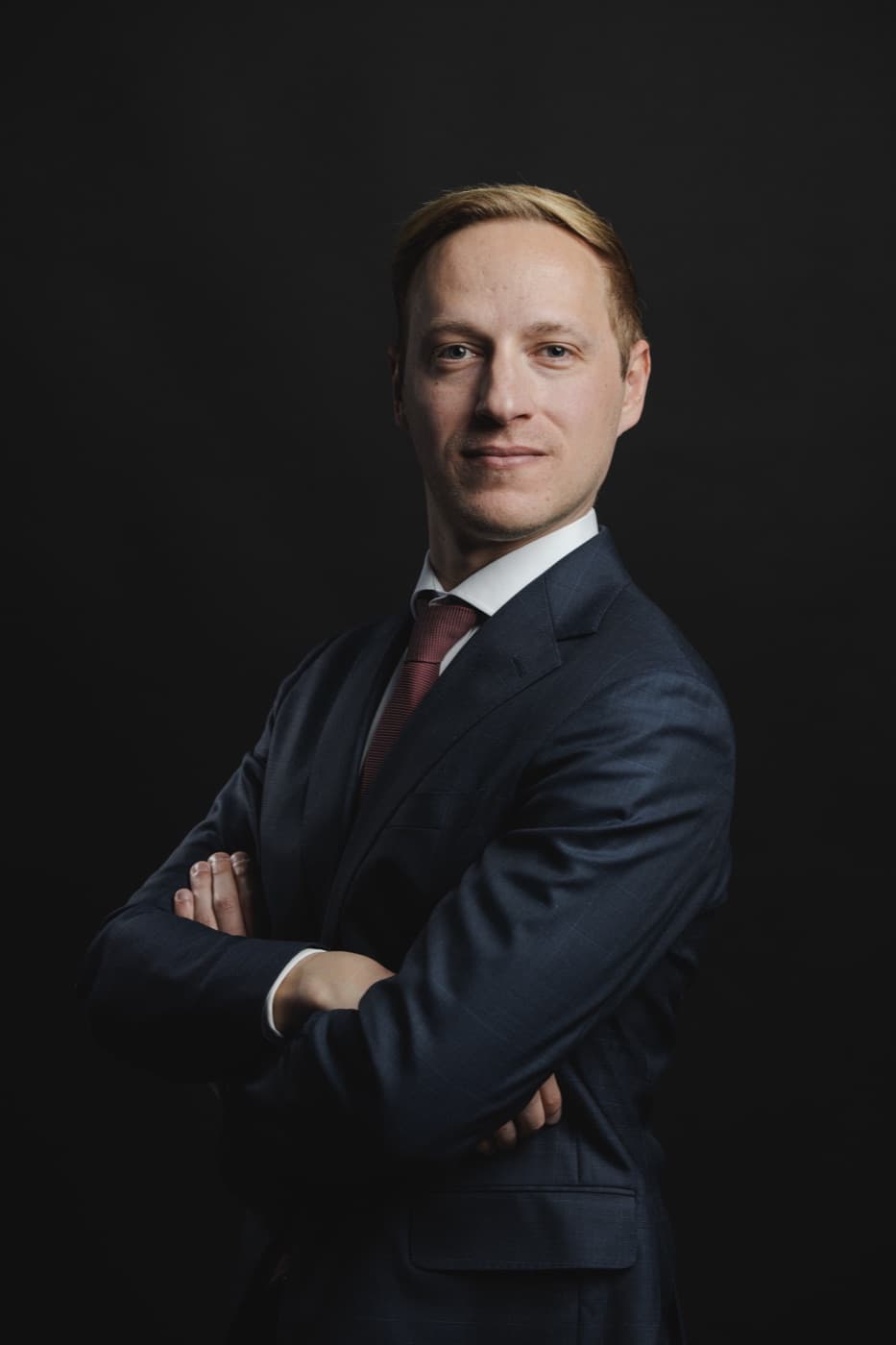
This is a fundamental difference from the tax departments of the large Geneva firms, where the file is frequently delegated. At COTAX, the tax lawyer you meet at the first appointment is the one who drafts the objection, negotiates with the AFC and pleads before the Court of Justice. Gilles Colin, partner, and Kevin Sirman, tax lawyer, both act under Swiss and French law.

Consultation and fees
How a consultation works, and our fees
The first consultation lasts about an hour. It serves to qualify the situation, identify the deadlines running and tell you whether an intervention is worthwhile. You leave with a clear position and, where appropriate, a costed estimate of the next steps. The appointment takes place at our office, 35 rue des Bains in Geneva, or by videoconference.
Our fees are based on an hourly rate communicated before any work begins. For engagements with a defined scope, a complex tax return, an objection, a voluntary disclosure, a lump-sum taxation request, we offer a fixed fee agreed in advance. No work is started until you have approved the corresponding budget. To prepare the first meeting, gather the assessment notice or letter received from the tax administration, its notification date and your last two tax returns.
Frequently asked questions
Answers to the questions most frequently put to a tax lawyer in Geneva: deadlines, procedures and fees.
Another question?
Ask a questionAs soon as a decision affects several tax years: arriving in or leaving the canton, selling a company, transferring wealth, receiving a request for information from the AFC. And immediately upon notification of a disputed assessment notice, since the objection deadline is 30 days.
The objection must be filed with the cantonal tax administration within 30 days of notification of the assessment notice. It must be reasoned and accompanied by supporting documents. If the decision is unfavourable, an appeal is open before the Administrative Court of First Instance, then the Administrative Chamber of the Court of Justice and, as a last resort, the Federal Supreme Court. Each of these stages has its own deadline, generally 30 days as well.
You have 30 days to file an objection. It will only succeed if you produce the missing tax return and the documents establishing your real situation, as the law requires the administration's estimate to be shown to be manifestly inaccurate. The faster the reaction, the better the chances of restoring an accurate assessment. After the deadline, the assessment becomes final.
The fiduciary keeps the books and prepares the tax return. The tax lawyer steps in as soon as a legal issue appears: a contested assessment, a tax audit, supplementary tax, a requalification, a question of tax domicile. They alone can represent you before the courts up to the Federal Supreme Court, and they alone exchange with you under professional secrecy. The two roles are complementary, not competing.
Tax domicile is determined by the effective centre of your personal and economic interests, not by your declared address. Where both States could claim you, the Franco-Swiss double taxation treaty sets successive criteria: permanent home, centre of vital interests, habitual abode, nationality. Clarifying this upstream avoids double taxation and a residence dispute, which is often long to resolve.
An hourly rate, communicated and approved before any work begins, or a fixed fee for engagements with a defined scope: a complex tax return, an objection, a voluntary disclosure, a lump-sum taxation request. The first consultation, of about an hour, has a fixed price indicated when the appointment is made. You know the budget before the work starts.
For supplementary tax, up to ten tax periods where the assessment proves incomplete, with special rules in cases of evasion and inheritance. This depth explains the scale some late-discovered cases take on. Keep your supporting documents well beyond the current year.
Yes. The firm has two offices, Annecy and Geneva, and handles Franco-Swiss cases on both sides of the border: tax residence, exit tax, real estate held in France, international successions, quasi-residents and cross-border workers.
Fees vary with what is at stake, the complexity of the matter and whether the client is an individual or a company. In Geneva, a tax lawyer's hourly rate generally ranges from CHF 300 to CHF 600, and more for complex international matters. At COTAX, a written estimate is provided at the first meeting, on an hourly or fixed-fee basis.
Check their bar admission, their genuine specialisation in tax law and their litigation experience, not just advisory work. For a Franco-Swiss situation, make sure they master both legal systems and the double taxation treaty. Finally, only a lawyer benefits from professional secrecy enforceable against the tax authorities, which sets them apart from a mere adviser or fiduciary.
In Geneva, law firms' hourly rates most often range from CHF 350 to CHF 850, depending on the lawyer's experience and the importance, urgency and complexity of the matter. Fees are set out in a written agreement before any work begins; some matters lend themselves to a fixed fee agreed in advance.
A one-off consultation is generally billed at a few hundred francs, depending on the preparation it requires. A non-lawyer tax adviser or fiduciary often charges less, but offers neither the lawyer's professional secrecy nor the ability to represent you before the courts. At COTAX, the first meeting is used to qualify your situation and price the work precisely.

A tax question between France and Switzerland?
Set out your situation in a confidential appointment. We answer with precision, under Swiss as well as French law.
Law firm in Geneva · 35, rue des Bains, 1205 Geneva · Monday to Friday